Pokémon Pocket Guide: A Comprehensive Overview
Pokémon’s enduring appeal spans decades‚ marked by distinct generations‚ each introducing new creatures‚ regions‚ and mechanics—a captivating journey for trainers!
Embark on an extraordinary adventure into the captivating realm of Pokémon‚ a universe brimming with mysterious creatures and boundless exploration! This world‚ initially conceived in 1996‚ quickly evolved into a global phenomenon‚ captivating hearts across generations. The core concept revolves around trainers—individuals dedicated to catching‚ training‚ and battling Pokémon. These pocket monsters possess unique abilities and elemental types‚ fostering strategic gameplay. The journey unfolds across diverse regions‚ each offering unique challenges and discoveries‚ making the Pokémon world a truly immersive experience.
What is Pokémon? A Brief History
Pokémon originated from Satoshi Tajiri’s childhood insect-collecting hobby‚ inspiring a game centered around capturing and training creatures. Released in 1996 with Pokémon Red and Green in Japan‚ it quickly gained traction. The franchise expanded with the Pokémon anime in 1997‚ further solidifying its cultural impact. Successive generations introduced new Pokémon‚ regions‚ and gameplay mechanics‚ continually evolving the experience and captivating a global audience for over three decades.
Pokémon Generations: Defining Eras
Pokémon is defined by its distinct generations‚ each representing a significant evolution in the franchise. These eras introduce new Pokémon‚ regions‚ and core gameplay mechanics‚ often attracting new fans while retaining the loyalty of veterans. Each generation marks a pivotal moment‚ shaping the overall Pokémon experience and contributing to its enduring legacy as a cultural phenomenon spanning decades of innovation.

The First Generation (Red‚ Blue‚ and Yellow)
Generation I launched the Pokémon craze‚ featuring 151 creatures and the Kanto region—a foundational experience for aspiring trainers worldwide!
Key Features of Generation I
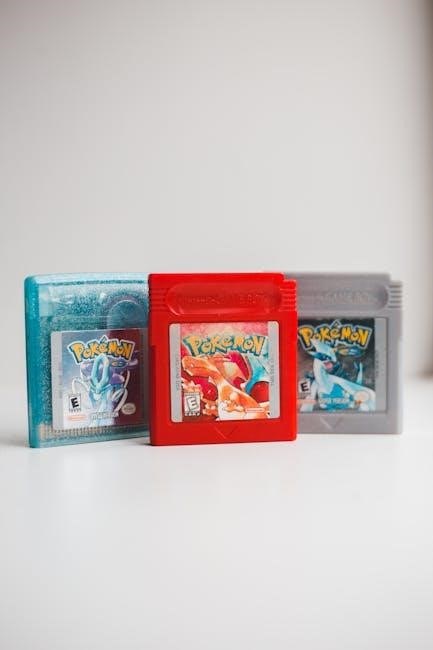
Generation I established core gameplay loops: catching‚ battling‚ and trading Pokémon; The limited movepools and stat distributions demanded strategic team building. The absence of abilities and natures emphasized type matchups. Saving progress relied on the battery-backed save feature within the Game Boy cartridge. Trading via the Link Cable fostered community and completion. The simple yet addictive formula captivated players‚ laying the groundwork for decades of Pokémon adventures and establishing a lasting legacy.
Iconic Pokémon from Generation I
Generation I gifted us with instantly recognizable Pokémon. Charizard’s fiery presence and powerful attacks made it a fan favorite. Pikachu‚ the electric mouse‚ became the franchise’s mascot. Mewtwo‚ a genetically engineered psychic powerhouse‚ presented a formidable challenge. Eevee’s unique evolution options sparked endless possibilities. These Pokémon‚ alongside many others‚ captured the hearts of players and cemented Generation I’s place in gaming history‚ inspiring countless fans.
The Kanto Region: A Beginner’s Paradise
The Kanto region‚ the setting for Pokémon Red‚ Blue‚ and Yellow‚ serves as an ideal starting point for aspiring trainers. Its diverse landscapes‚ from sprawling routes to bustling cities‚ offer a welcoming introduction to the Pokémon world. Gym Leaders provide structured challenges‚ gradually increasing in difficulty. Kanto’s relatively straightforward layout and manageable Pokémon variety make it a perfect launchpad for new adventures.
The Second Generation (Gold‚ Silver‚ and Crystal)
Generation II expanded the Pokémon universe with 100 new species‚ introducing breeding mechanics and the Johto region—a thrilling evolution for trainers!
Gold‚ Silver‚ and Crystal dramatically enriched the battling landscape by introducing the Dark and Steel-type Pokémon. These additions were strategically implemented to balance the existing type matchups‚ specifically addressing the overwhelming power of Psychic-types prevalent in Generation I. Dark-types proved super effective against Psychic‚ while Steel-types offered numerous resistances‚ creating a more diverse and strategically complex competitive scene. This shift encouraged trainers to rethink team compositions and battle strategies‚ fostering a deeper understanding of type interactions and overall gameplay.
The Johto Region and its Unique Challenges
The Johto region‚ featured in Gold‚ Silver‚ and Crystal‚ presented trainers with distinct challenges beyond simply defeating Gym Leaders. A key feature was the introduction of a day-and-night cycle‚ influencing Pokémon encounters and events. Trainers also faced the threat of Team Rocket’s resurgence‚ alongside unique regional Pokémon and a post-game adventure revisiting the Kanto region. These elements combined to offer a more expansive and immersive experience‚ testing trainers’ skills and dedication.
Breeding and Pokémon Eggs
Generation II revolutionized Pokémon gameplay with the introduction of breeding. Players could leave Pokémon at the Day-Care‚ resulting in Eggs containing new Pokémon! These Eggs inherited moves from parents and possessed varying Individual Values (IVs)‚ influencing stats. Breeding allowed for obtaining Pokémon unavailable in the wild and optimizing Pokémon for competitive battling‚ adding a new layer of strategic depth to the experience.
The Third Generation (Ruby‚ Sapphire‚ and Emerald)
Ruby‚ Sapphire‚ and Emerald brought Double Battles and Pokémon Abilities‚ enhancing strategic depth and team composition possibilities for trainers everywhere!
Double Battles and Abilities
Generation III revolutionized battling with the introduction of Double Battles‚ demanding new strategies and team synergy. No longer could trainers rely on single Pokémon dominance; coordinating attacks and protecting partners became crucial. Simultaneously‚ Pokémon Abilities added another layer of complexity‚ granting unique passive effects during battle.
These Abilities ranged from stat boosts to weather manipulation‚ influencing battle outcomes significantly. Mastering Abilities and utilizing them effectively in Double Battles became essential for competitive success‚ forever changing the Pokémon battling landscape.
The Hoenn Region: Water and Adventure
The Hoenn region‚ featured in Ruby‚ Sapphire‚ and Emerald‚ is characterized by its expansive oceans and diverse aquatic routes. This emphasis on water-based exploration introduced innovative features like underwater exploration and surfing mechanics‚ creating a unique sense of adventure. Players navigated islands‚ delved into coral reefs‚ and encountered numerous Water-type Pokémon.
Hoenn’s landscape fostered a feeling of discovery‚ with hidden caves and vibrant ecosystems. The region’s focus on water truly set it apart‚ offering a refreshing change of pace for trainers.
Secret Bases and Pokémon Contests
Ruby‚ Sapphire‚ and Emerald introduced engaging side activities beyond the main storyline. Secret Bases allowed players to personalize hidden locations‚ decorating them and inviting friends to visit‚ fostering a sense of community and creativity. Simultaneously‚ Pokémon Contests offered a different competitive avenue‚ judging Pokémon on their coolness‚ beauty‚ cuteness‚ smartness‚ and toughness.
These features added depth to the Hoenn experience‚ providing enjoyable diversions and showcasing Pokémon in new‚ non-battle contexts.

The Fourth Generation (Diamond‚ Pearl‚ and Platinum)
Diamond‚ Pearl‚ and Platinum expanded the Pokémon world with the Sinnoh region‚ introducing a Physical/Special split that revolutionized gameplay mechanics.
The Sinnoh Region and the Distortion World
The Sinnoh region‚ inspired by Hokkaido‚ Japan‚ presents a diverse landscape ranging from snowy mountains to lush forests‚ offering a unique exploration experience for trainers. Central to Sinnoh’s lore is the mysterious Distortion World‚ a realm ruled by the mythical Pokémon Giratina. This dimension exists parallel to the Pokémon world‚ exhibiting warped physics and an otherworldly atmosphere.
Accessing the Distortion World is a pivotal moment in the game‚ requiring players to confront Giratina and unravel the secrets of this strange and powerful place. The region’s mythology deeply intertwines with the creation trio – Dialga‚ Palkia‚ and Giratina – adding layers of complexity to the narrative.
Physical/Special Split: A Gameplay Revolution
Generation IV introduced a fundamental shift in battle mechanics: the Physical/Special split. Previously‚ damage type was determined by move name‚ leading to strategic limitations. This update categorized moves as either physical or special‚ based on the stat they utilized – Attack or Special Attack.
This change dramatically altered competitive battling‚ allowing for more nuanced team building and strategic move choices. Pokémon could now effectively utilize both physical and special attacks‚ enhancing their versatility and overall battle prowess‚ creating a more balanced gameplay experience.
Pokémon Super Contests
Pokémon Super Contests‚ a core feature of the Sinnoh region‚ offered a different avenue for Pokémon trainers to showcase their skills. Unlike traditional battles‚ these contests focused on Pokémon’s coolness‚ beauty‚ cuteness‚ smartness‚ and toughness.
Trainers utilized moves to impress judges in these categories‚ earning ribbons and ultimately aiming for the title of Top Coordinator. It was a vibrant‚ performance-based system‚ adding a layer of creative expression to the Pokémon world.
The Fifth Generation (Black and White)
Generation V boldly introduced a completely new Pokémon roster‚ set within the Unova region—a land brimming with dreams‚ ideals‚ and exciting new battle formats!
A Completely New Pokémon Roster
Pokémon Black and White dramatically departed from tradition by featuring an entirely new cast of 156 Pokémon. This bold move meant trainers couldn’t rely on familiar favorites from previous generations‚ fostering a fresh experience. The Unova region’s Pokédex was distinct‚ encouraging exploration and discovery of these novel creatures. This decision revitalized the series‚ attracting both veteran players and newcomers eager to embark on a brand-new adventure‚ building a unique ecosystem within the game.
The Unova Region: Dreams and Ideals
The Unova region‚ inspired by New York City‚ embodies themes of dreams and ideals. Its bustling cities and serene natural landscapes reflect a society grappling with progress and tradition. Trainers journey through this diverse region‚ confronting Team Plasma‚ who challenge the ethics of Pokémon battling. Unova’s narrative explores the bond between humans and Pokémon‚ questioning the very core of their relationship‚ offering a thought-provoking experience.
Triple Battles and Rotation Battles
The fifth generation revolutionized battling with the introduction of Triple Battles and Rotation Battles. Triple Battles feature three Pokémon per side‚ demanding strategic positioning and type coverage. Rotation Battles add a dynamic element‚ allowing trainers to switch their active Pokémon during battle. These formats emphasize teamwork‚ prediction‚ and adaptability‚ offering a fresh and challenging competitive experience for seasoned trainers.

The Sixth Generation (X and Y)
Generation VI brought Mega Evolution‚ a powerful temporary transformation‚ alongside the beautiful Kalos region and innovative features like Pokémon-Amie for bonding!
Mega Evolution: A Powerful Transformation
Mega Evolution‚ introduced in Pokémon X and Y‚ represents a temporary yet dramatic power boost for certain Pokémon during battle. Triggered by the Mega Stone held by a compatible Pokémon and the trainer’s Key Stone‚ it alters the Pokémon’s appearance and significantly increases its stats.
Unlike regular evolution‚ Mega Evolution is reversible‚ returning the Pokémon to its original form after the battle concludes. This mechanic added a new layer of strategic depth‚ allowing trainers to unleash incredible power for a limited time‚ changing the competitive landscape.
The Kalos Region: Beauty and Fashion
The Kalos region‚ inspired by France‚ is renowned for its elegance‚ artistry‚ and emphasis on fashion within the Pokémon universe. Trainers explore a diverse landscape‚ from bustling cities like Lumiose to picturesque villages‚ all while encountering unique Pokémon and stylish trainers.
Kalos features Pokémon Contests focused on visual appeal and performance‚ reflecting the region’s appreciation for beauty. The region’s aesthetic heavily influences character designs and environments‚ creating a visually stunning experience for players.
Pokémon-Amie and Super Training
Introduced in Pokémon X and Y‚ Pokémon-Amie fostered deeper bonds with Pokémon through petting‚ playing‚ and feeding‚ enhancing friendship and battle benefits. Simultaneously‚ Super Training offered a customizable regimen to improve Pokémon’s Effort Values (EVs)‚ optimizing stats for competitive battling.
These features provided innovative ways to interact with Pokémon beyond traditional training‚ adding a layer of personalization and strategic depth to the gameplay experience‚ appealing to a wider audience.

The Seventh Generation (Sun and Moon)
Pokémon Sun and Moon revolutionized gameplay with Alola Forms‚ regional variants‚ and the powerful Z-Moves‚ offering a fresh experience within the Alola region!
Alola Forms: Regional Variants
Alola Forms represent a fascinating twist in the Pokémon world‚ showcasing how creatures adapt to new environments. Introduced in Sun and Moon‚ these regional variants exhibit altered typings‚ appearances‚ and abilities‚ reflecting the unique climate and ecosystem of the Alola region.
For example‚ Exeggutor gains a Dragon typing and a towering stature‚ while Vulpix and Ninetales become Ice-types‚ beautifully adapted to the colder climates of certain Alolan islands. These forms add a layer of discovery and strategic depth‚ compelling trainers to rethink familiar battle strategies and appreciate the impact of environment on Pokémon evolution.
Z-Moves: Powerful One-Time Attacks
Z-Moves‚ introduced in Pokémon Sun and Moon‚ are incredibly powerful‚ one-time-use attacks that add a dramatic flair to battles. Each Pokémon compatible with a Z-Crystal can unleash a unique Z-Move‚ requiring a charged Z-Ring worn by the trainer.
These attacks boast immense strength and often feature spectacular animations‚ capable of turning the tide of battle. Mastering Z-Moves requires strategic timing and understanding of type matchups‚ offering a thrilling and impactful element to the Pokémon battling experience.
The Alola Region: Island Challenges
The Alola region‚ featured in Pokémon Sun and Moon‚ departs from traditional Gym challenges‚ presenting instead the Island Challenges. Trainers journey across four islands‚ completing trials designed to test their skills and bond with their Pokémon.
These trials culminate in battles against powerful Totem Pokémon‚ and ultimately‚ facing the Kahuna‚ the island’s leader. This unique structure offers a refreshing take on the Pokémon League progression‚ emphasizing exploration and regional culture.
The Eighth Generation (Sword and Shield)
Pokémon Sword and Shield introduced the Galar region‚ inspired by Great Britain‚ alongside the colossal Dynamax and Gigantamax phenomena‚ reshaping battles!
The Galar Region: A British Inspiration
The Galar region‚ the setting for Pokémon Sword and Shield‚ draws heavily from Great Britain’s landscapes and culture. Rolling hills‚ industrial cities‚ and charming villages evoke a sense of familiarity‚ yet remain distinctly Pokémon-esque.
Its design incorporates elements of British folklore and aesthetics‚ influencing everything from Pokémon designs to gym challenges. The region’s history revolves around a legendary hero and a dark past‚ adding depth to the exploration. Players uncover the mysteries of the region while striving to become the Champion‚ experiencing a uniquely British Pokémon adventure.
Dynamax and Gigantamax: Colossal Pokémon
Dynamax and Gigantamax are defining features of Pokémon Sword and Shield‚ allowing Pokémon to grow to colossal sizes during battles. Dynamax increases a Pokémon’s size and power‚ changing its moves into Max Moves.
Gigantamax takes it further‚ granting unique appearances and powerful G-Max Moves. These transformations are temporary but dramatically alter the battlefield‚ adding a strategic layer to combat. This mechanic introduces a visually stunning and tactically engaging element to the Pokémon experience.
Wild Area Exploration
The Wild Area in Pokémon Sword and Shield represents a significant departure from traditional routes‚ offering a vast‚ open-world environment for exploration. This expansive zone features dynamic weather‚ roaming Pokémon of varying levels‚ and a shared online experience with other players.
Trainers can freely roam‚ discover hidden items‚ and participate in Max Raid Battles. The Wild Area fosters a sense of adventure and discovery‚ enriching the Pokémon journey with its immersive and interactive landscape.

The Ninth Generation (Scarlet and Violet)
Scarlet and Violet introduce the Paldea region‚ boasting an open-world design and the innovative Terastallizing battle mechanic‚ reshaping the Pokémon experience.
The Paldea Region: Open-World Adventure
The Paldea region‚ featured in Pokémon Scarlet and Violet‚ marks a significant departure with its expansive‚ fully open-world environment. Players are granted unprecedented freedom to explore a diverse landscape inspired by the Iberian Peninsula. Three distinct storylines converge‚ allowing for a non-linear progression through Victory Road‚ Path of Legends‚ and Starfall Street. This design encourages exploration and discovery‚ fostering a truly immersive experience unlike previous Pokémon games‚ offering a fresh perspective on the classic formula.
Terastallizing: A New Battle Mechanic
Terastallizing‚ introduced in Pokémon Scarlet and Violet‚ is a transformative battle mechanic. Pokémon can crystallize‚ gaining a Tera Type that alters their typing and boosts moves of that type. This adds a layer of strategic depth‚ as predicting an opponent’s Tera Type becomes crucial for victory. The dazzling crystalline forms also offer a visually striking element to battles‚ enhancing the overall competitive experience and providing new tactical options.
Three Main Storylines
Pokémon Scarlet and Violet break tradition with three distinct storylines‚ offering a non-linear adventure. Players embark on Victory Road‚ challenging Gym Leaders‚ and the Path of Legends‚ battling Titan Pokémon. Finally‚ there’s Starfall Street‚ confronting Team Star. This innovative structure allows players to experience the Paldea region at their own pace‚ fostering a unique and personalized journey through a vast and engaging world.

Pokémon Media and Adaptations
Pokémon’s influence extends beyond gaming‚ encompassing a long-running anime series‚ the digital shorts Pokémon Generations‚ and the popular Pokémon Trading Card Game.
Pokémon Anime: A Long-Running Series
The Pokémon anime‚ debuting alongside the games‚ has captivated audiences for over two decades‚ following Ash Ketchum’s persistent quest to become a Pokémon Master. This enduring series showcases diverse regions‚ Pokémon battles‚ and character development‚ mirroring the game’s generational shifts.
Episodes frequently adapt storylines from the games‚ introducing new Pokémon and challenges with each generation. Beyond the main narrative‚ numerous movies and spin-off series expand the Pokémon universe‚ solidifying its place as a cornerstone of anime culture and a beloved adaptation for fans worldwide.
Pokémon Generations: A Digital Series
Pokémon Generations‚ a digital series released in 2016‚ offered a fresh perspective on the Pokémon world by revisiting key moments from each of the core game generations. Each episode focused on previously untold stories or expanded upon existing lore‚ providing deeper insights into beloved characters and pivotal events.
This short-form content catered to both longtime fans and newcomers‚ offering a concise and engaging way to experience the rich history of the franchise. It successfully bridged the gap between the games and the main anime series‚ enhancing the overall Pokémon experience.
Pokémon Trading Card Game: A Collectible Hobby
The Pokémon Trading Card Game (TCG)‚ launched in 1996‚ quickly became a global phenomenon‚ evolving into a highly popular collectible hobby. Players build decks featuring Pokémon cards‚ battling each other strategically using energy and abilities.
Beyond gameplay‚ the TCG fosters collecting‚ with rare and valuable cards driving a thriving secondary market. Booster packs‚ theme decks‚ and special sets continually expand the game‚ ensuring ongoing engagement for enthusiasts of all ages and skill levels.
Competitive Pokémon: Battling and Strategy
Pokémon battling transcends casual play‚ evolving into a strategic competitive scene with official championships and dedicated resources like Smogon University for advanced training.
Pokémon World Championships
The Pokémon World Championships represent the pinnacle of competitive play‚ drawing skilled trainers globally to battle for prestigious titles across various game formats. These championships‚ recently concluding in 2025‚ showcase intense strategic battles and dedication.
During the closing ceremony‚ a significant announcement was made by The Pokémon Company president‚ signaling future developments within the competitive scene and the broader Pokémon universe‚ exciting fans worldwide.
Smogon University: Competitive Resources
Smogon University stands as a cornerstone for competitive Pokémon battling‚ offering extensive resources for players seeking to refine their strategies and understanding of the metagame. It provides detailed analyses of Pokémon‚ moves‚ and team compositions.
Players utilize Smogon to learn about crucial concepts like IVs‚ EVs‚ and Natures‚ essential for maximizing a Pokémon’s potential in battle‚ fostering a thriving competitive community.
IVs‚ EVs‚ and Natures
Individual Values (IVs) represent a Pokémon’s inherent genetic potential‚ influencing its stats. Effort Values (EVs) are earned through battling‚ allowing trainers to customize stat growth‚ strategically enhancing a Pokémon’s strengths.
Natures further modify stat growth‚ boosting one stat while hindering another‚ adding a layer of personalization. Mastering these elements is crucial for competitive success and optimized team building.